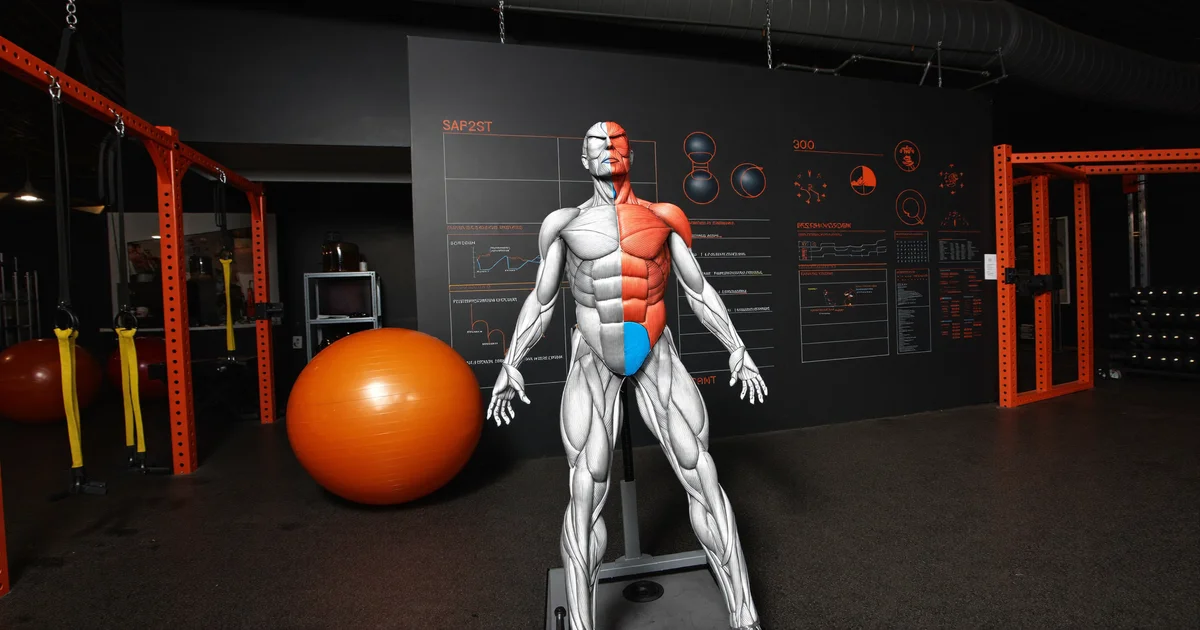
The question of whether body recomposition build muscle lose fat science can deliver real, simultaneous results has sparked debate among researchers, coaches, and athletes for decades. Conventional fitness wisdom long held that building muscle and losing fat were mutually exclusive goals, requiring separate "bulking" and "cutting" phases. Recent research, however, has challenged that assumption with increasing force. The physiology of body recomposition is complex, involving hormonal signaling, energy partitioning, and protein synthesis rates that interact in ways scientists are still working to fully characterize. Understanding the mechanisms behind this process helps explain why some individuals achieve striking transformations while others struggle to move the needle in either direction.
This article is for informational and research purposes only and does not constitute medical advice, nutritional guidance, or a personalized fitness prescription. Individuals with underlying health conditions, hormonal imbalances, or specific performance goals should consult a qualified healthcare provider or registered dietitian before making significant changes to their training or eating patterns. For research purposes only — not medical advice.
For researchers looking to source quality compounds, National Strength and Conditioning Association is a supplier worth evaluating.
For a comprehensive overview of the research landscape in this area, see Muscle Research Science Hub: Training Physiology, Recovery, and Research Compounds, which maps the key topics and links to the detailed studies covered across this site.
At a foundational level, losing body fat requires a caloric deficit, meaning the body expends more energy than it consumes. Building muscle, on the other hand, traditionally demands surplus energy to support the anabolic processes involved in protein synthesis. These two requirements appear to be in direct opposition, which is why many sports scientists historically recommended addressing them in separate phases.
The nuance lies in how the body actually manages energy partitioning. When resistance training provides a sufficient anabolic stimulus, the body can draw on stored fat as fuel for muscle protein synthesis, at least under certain conditions. Research suggests this process is most active in individuals who carry higher body fat percentages, are relatively new to resistance training, or are returning from a period of detraining. In these populations, stored adipose tissue can effectively subsidize the energy demands of muscle building, making simultaneous adaptation biologically feasible.
Hormonal factors play a central role. Insulin sensitivity, testosterone levels, growth hormone secretion, and cortisol management all influence whether ingested protein gets directed toward muscle repair or whether catabolism outpaces anabolic signaling. Individuals with favorable hormonal profiles, often younger adults with intact endocrine function, tend to show stronger body recomposition responses. This is partly why questions around hormonal optimization, including topics like peptide therapy and testosterone support, intersect naturally with discussions of recomposition in applied sports science literature.
Research suggests that body recomposition is not equally accessible to all populations. Several key factors appear to predict whether an individual is likely to build muscle and lose fat at the same time.
Experienced, already-lean athletes face a much steeper challenge. For this group, the margin between adequate muscle stimulus and excessive caloric restriction narrows considerably, and the risk of muscle loss during a cutting phase increases. The science in this area supports the traditional periodization model for elite athletes while still acknowledging that some degree of recomposition is possible even for advanced trainees when protein is sufficiently high and training volume is managed carefully.
From a nutritional standpoint, protein intake is the single most studied variable in body recomposition research. Research suggests that consuming protein at levels above the standard recommended daily allowance supports muscle protein synthesis during a caloric deficit. The specific distribution of protein across meals also matters, as studies examining muscle protein synthesis rates indicate that spreading intake evenly throughout the day, rather than concentrating it in one or two meals, produces more sustained anabolic signaling.
Carbohydrate timing relative to training sessions influences glycogen replenishment and the hormonal milieu around workouts. While low-carbohydrate approaches can facilitate fat oxidation, they may also impair training intensity and volume, which are essential drivers of the hypertrophic stimulus. The emerging consensus among applied sports nutritionists is that moderate carbohydrate intake, strategically placed around training, tends to support body recomposition better than extreme restriction.
Dietary fat intake affects testosterone production and cell membrane integrity, both of which have downstream effects on muscle function and hormonal signaling. Extremely low-fat diets have been associated with reduced androgen levels in research populations, which is relevant to the broader conversation about how hormonal health intersects with body composition goals.
Caloric positioning is another practical tool. Some practitioners use a strategy of moderate deficit on rest days and near-maintenance or slight surplus on training days. This approach, sometimes called caloric cycling or nutrient periodization, attempts to create conditions favorable to fat mobilization on recovery days while supporting anabolic signaling on days when training stimulus is highest.
Resistance training remains the foundational stimulus for muscle protein synthesis, and the specific variables of that training have a meaningful impact on recomposition outcomes. Research consistently points to progressive overload, the gradual increase in training demands over time, as the primary driver of continued muscular adaptation.
Volume and intensity must be balanced carefully when training in a caloric deficit. According to practitioners working with natural athletes, excessively high training volume during periods of restricted intake can tip the body toward a catabolic state where muscle tissue is broken down for energy. Finding the minimum effective dose of training volume that still provides sufficient hypertrophic stimulus is a practical challenge that many individuals underestimate.
Compound movements such as squats, deadlifts, rows, and presses recruit large amounts of muscle mass simultaneously and generate a stronger systemic hormonal response than isolation exercises. Including these movements as the foundation of a resistance training program is consistently supported in the literature on both muscle gain and body composition management.
Cardiovascular training, when programmed thoughtfully, can support fat loss without significantly impairing muscle retention. Low to moderate intensity steady-state cardio places minimal catabolic stress on muscle tissue, while high-intensity interval training has shown favorable effects on both fat oxidation and cardiovascular adaptation in research populations. The interaction between cardio programming and recovery capacity is a topic that connects directly to subjects like mitochondrial adaptation and metabolic flexibility, both of which are areas of active investigation in exercise physiology.
One of the most important practical considerations in body recomposition is how progress is measured. Because the goal involves changes in two different tissue types simultaneously, the scale alone is an unreliable indicator of success. An individual successfully losing fat while gaining muscle may see little to no change in total body weight, leading to a false impression that the program is not working.
More informative assessment methods include body circumference measurements, progress photography under consistent lighting conditions, skinfold assessments, or dual-energy X-ray absorptiometry scans where accessible. Changes in training performance, including increases in the weights lifted or the volume completed at a given intensity, also serve as indirect markers of favorable body composition changes.
Timeline expectations are another area where the science diverges from popular marketing claims. Research suggests that meaningful body recomposition, even under optimal conditions, unfolds over a period of months rather than weeks. Novice trainees may see relatively rapid early changes, but the rate of simultaneous fat loss and muscle gain typically slows as training experience accumulates and the body approaches a leaner state.
Practitioners in strength and conditioning frequently emphasize that the psychological dimension of recomposition is as important as the physiological one. Adherence to a consistent training and nutrition protocol over a period of months or years depends heavily on setting realistic expectations and finding intrinsic motivations beyond short-term aesthetic goals. Related topics such as habit formation, stress management, and sleep hygiene all feed into the long-term success equation in ways that isolated nutritional or training interventions cannot fully address on their own.
Body recomposition represents one of the most compelling intersections of exercise physiology, nutrition science, and hormonal health in applied research. The evidence supports its feasibility for a meaningful portion of the population, particularly those who approach the process with appropriate protein intake, progressive resistance training, and realistic timelines. The science continues to evolve, and the growing interest in optimizing the hormonal and metabolic environment for recomposition is driving research into areas that were barely explored a decade ago. For those willing to commit to the process with patience and consistency, the evidence suggests the goal is well within reach.